

South Africa took a famously long and winding road to television. Political resistance, cost concerns, and culture-war anxieties delayed the first national broadcast until the mid-1970s, decades after many peers. Yet once TV arrived, it evolved quickly: multiple language services in the 1980s, liberalisation in the 1990s, pay-TV and satellite in the 2000s, and today’s streaming-first habits. This updated guide traces that journey from early demonstrations to the digital and OTT era — including where things stand right now.

Early Experiments and Decades of Delay (1920s–1960s)
Long before TV was officially adopted, South Africans saw the technology at exhibitions and demonstrations. A notable public showcase took place at Johannesburg’s 1936 Empire Exhibition, where visitors queued to “be televised” — proof that the technology was known locally even as policymakers hesitated.
Despite mounting global adoption, the government resisted television for ideological reasons. Senior officials argued it would import ‘undesirable’ content and be hard to control in the home — sentiments often cited to explain why South Africa arrived so late to TV.
1976: The Night the Screen Finally Lit Up
South Africa’s first national TV broadcast went live on 5 January 1976 at 6 p.m. The continuity presenters were Heinrich Maritz (Afrikaans) and Dorianne Berry (English). Test transmissions had run in Johannesburg months earlier, but this was the countrywide launch. Notably, South Africa debuted directly in colour on the PAL standard, skipping black-and-white altogether.
Advertising followed a little later as the service matured, with licences and schedule rules shaping the early TV economy.
Expansion and Language Services (1980s)
By the early 1980s, the SABC added new channels and language windows to broaden reach. Services branded TV2, TV3 (1982) and later TV4 carved out airtime for different language groups and content types, albeit within strict controls.
Transition and Liberalisation (1990s)
Political transition in the 1990s brought structural change. Channels were reorganised and relaunched as SABC 1, 2, and 3. On 1 October 1998, e.tv launched as South Africa’s first privately owned national free-to-air channel — a pivotal moment.
The Pay-TV and Satellite Era (mid-1990s–2000s)
Subscription services transformed viewing. MultiChoice introduced DStv in 1995, one of the earliest digital satellite platforms outside the US. Dedicated sports, movies and international channels proliferated, making decoders a household fixture.

Digital Migration: A Long Road
Government announced plans in 2007 to migrate from analogue to digital terrestrial broadcasting. Implementation stretched over years due to technical and legal hurdles. Courts recently suspended switch-off deadlines, citing risks to households still reliant on analogue signals.
Streaming and the Shift to OTT (2010s–2020s)
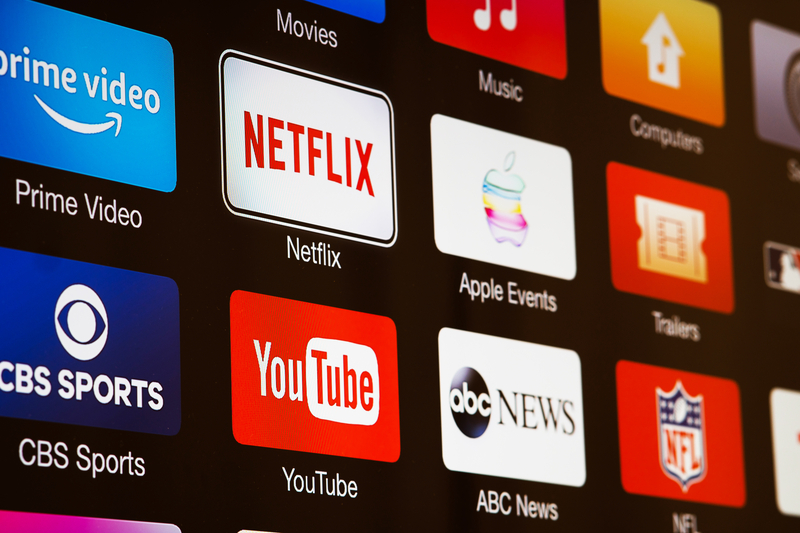
Broadband growth brought streaming. Netflix, Disney+, and Amazon joined the local Showmax platform. The SABC launched SABC Plus in 2022, reporting millions of monthly views by 2023/24. Traditional pay-TV softened as households blended satellite, free-to-air, and OTT viewing.
The History of TV in South Africa Key Turning Points at a Glance
- 1936 – Public demo at Johannesburg Empire Exhibition
- 5 Jan 1976 – First national TV broadcast in colour
- 1982–1985 – Expansion into TV2/3/4
- Mid-1990s – Channels relaunched as SABC 1/2/3
- 1995 – DStv launches
- 1 Oct 1998 – e.tv launches
- 2007 onwards – Digital migration policy announced
- Nov 2022 – SABC Plus launches
What Makes South Africa’s TV Story Unique?
South Africa launched later than most countries — but skipped black-and-white, going straight to colour. Language diversity shaped programming, while the arrival of e.tv and DStv introduced true competition. Today, streaming platforms push further innovation and local content production.
Today’s Landscape — and What’s Next
TV is now consumed via terrestrial, satellite, and streaming. Public service goals must co-exist with commercial realities. With analogue switch-off unresolved and affordability under pressure, the future looks hybrid: broadcast for reach, OTT for convenience.
Solomon Barrett
October 2, 2025 at 9:41 amHelpful and well-organized. Subscribed to your newsletter.
Bennett Lowery
October 2, 2025 at 12:23 amNice article! I especially liked the actionable checklist.
Deja Patterson
October 1, 2025 at 8:58 pmThis is one of the best articles on the topic I’ve seen recently.
Zackary Mcgee
October 1, 2025 at 8:23 pmNice work! I shared this with colleagues who will appreciate it.
Liam Jacobs
October 1, 2025 at 5:31 pmAwesome! Its genuinely remarkable post, I have got much clear idea regarding from this post
Salvatore Rush
October 1, 2025 at 3:19 pmInsightful post — I’d be interested in a follow-up on advanced topics.
Azul Howard
October 1, 2025 at 2:36 pmInsightful post — I’d be interested in a follow-up on advanced topics.
Kendal Boyd
October 1, 2025 at 12:08 pmA concise guide with practical steps — very helpful indeed.
Milagros Kaiser
October 1, 2025 at 12:21 amGreat post — I found the examples really helpful. Thanks for sharing!
Genevieve Leblanc
September 30, 2025 at 10:48 pmGood read — the key takeaways were especially helpful.
Andre Atkins
September 30, 2025 at 10:10 pmThank you for the clear roadmap — it makes the process less intimidating.
Baron Farley
September 30, 2025 at 11:56 amConcise and informative. I learned something new today.