
You may only use your microwave for a few minutes at a time, but when it’s the wrong one, you notice. Dinner plates catch against the sides. A casserole dish won’t fit. Reheating takes longer than expected. Or half the buttons sounded useful in the shop and haven’t been touched since.
That’s why choosing the best microwaves has less to do with finding the model with the longest feature list and more to do with how you’ll use it. A student heating one plate at a time needs very different things than a family reheating larger dishes, while someone planning a fitted kitchen has measurements and installation requirements to consider before cooking even enters the picture.
Start with the space you have, including what needs to fit inside the microwave. Then consider power, cooking modes, and features such as inverter technology or sensor cooking.
Hirsch’s range of microwaves covers everything from compact solo models to grill, convection, and built-in options, so you’ll find plenty of choice once you know what you want.
Start With Size Because Litres Don’t Tell You Everything
Microwave capacity is normally given in litres, which can be useful when you’re making broad comparisons. A compact microwave oven might be perfectly adequate for one person reheating meals, while a larger household may want substantially more room for serving dishes and family-sized portions.
The problem is that the litre figure doesn’t tell you the shape of the space.
Two microwaves with similar advertised capacities can have different cavity widths, heights and turntable diameters. One may take your everyday dinner plates comfortably while another leaves very little clearance.
But don’t limit yourself to checking if a dinner plate will fit. Think about what you typically microwave. If you mostly microwave mugs, bowls, and individual dinner plates, you probably don’t need an enormous cavity. If you regularly reheat food in large glass dishes, steam vegetables in bigger containers, or prepare family portions, usable width and depth matter more.
How Many Litres Do You Need?
No single capacity suits every household, but you can narrow your choice quickly by thinking about how you cook.
Smaller microwaves make sense in student accommodation, flats, office kitchens, and homes where you mainly use the appliance for drinks, snacks, and individual portions. They also take up less valuable countertop space.
Mid-sized models suit many households because they offer enough room for everyday plates and bowls without becoming particularly bulky.
A larger cavity becomes more useful when you’re heating bigger serving dishes, preparing larger quantities of food or relying on the microwave for more than reheating. Combination and convection microwave models also tend to need extra internal room because they’re expected to do more oven-like cooking.
But don’t choose by litres alone. Where the specifications provide them, check the internal dimensions and turntable diameter as well.
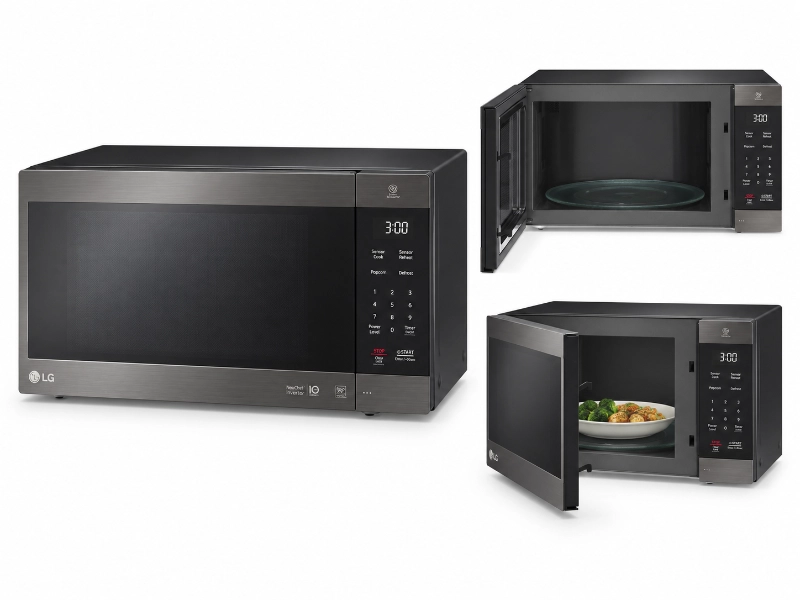
The LG 56L Solo NeoChef Microwave shows how broad the capacity range can be, with a 56 L cavity. That much space may be useful if you routinely heat larger dishes or larger quantities, but it may be unnecessary for many one- or two-person households. It is also significantly wider, taller, and deeper than your average microwave, so you need to have adequate space for it.
Measure Your Space Before You Buy
Before you compare brands or features, measure the space you have for a microwave.
A microwave that is a few centimetres too deep can protrude awkwardly over the edge of a worktop. One that’s too tall may not have enough ventilation beneath an overhead cupboard. Built-in microwaves introduce another set of measurements because the appliance itself and the cabinet opening aren’t necessarily the same size.
Before buying, check:
- Available width: Measure the narrowest part of the intended space.
- Available height: Include cupboards, shelving and anything mounted above the microwave.
- Depth: Measure the usable worktop or cabinet depth, including space for the plug and cable.
- Ventilation clearance: Follow the clearance specified by the manufacturer rather than assuming a microwave can sit tightly against surrounding surfaces.
- Door clearance: Make sure the door can open fully without hitting a wall, cabinet handle or neighbouring appliance.
- Your dishes: Measure your largest regularly used dinner plate, bowl and microwave-safe serving dish.
- Turntable diameter: A large cavity isn’t much help if the dish you use every night can’t rotate freely.
- Built-in cut-out dimensions: If the microwave is going into cabinetry, use the installation measurements for the exact model.
Built-in appliance drawings can specify recess width and height, ventilation openings, support requirements and even where an electrical outlet can be positioned. In other words, always measure for the installation instructions.
If you’re renovating rather than replacing an existing microwave, choose the appliance before you lock in the final cabinetry dimensions.
Solo, Grill or Convection: Which Microwave Do You Need?
This decision affects both price and usefulness more than many smaller convenience features.
| Microwave Type | Best Suited To | Main Limitation |
|---|---|---|
| Solo microwave | Reheating, defrosting and everyday microwave cooking | Doesn’t brown or crisp food |
| Microwave with grill | Heating plus browning or finishing | Grill adds cost and cleaning |
| Convection or combination microwave | Microwave cooking plus baking and roasting | Larger, more expensive and more complicated |
Solo Microwaves
A solo microwave does what most people associate with microwave cooking: heating leftovers, warming drinks, defrosting ingredients and cooking suitable foods using microwave energy.
And for many households, that’s enough.
If you already have an oven and perhaps an air fryer or countertop grill, paying extra for another appliance that duplicates those functions may not make sense. A good solo microwave with sensible controls, enough internal room and suitable power can be the more useful choice.
This is particularly true if you’re shopping for a replacement and know that you hardly used any of the advanced programmes on your old microwave. Hirsch’s range includes models such as the Midea 20l Black Digital Inverter Microwave, a much more straightforward (and compact) option for people who mainly want the core microwave functions without paying for grill or convection cooking.
Microwaves With a Grill
A microwave grill adds a heating element that can brown the surface of food in a way microwave energy alone cannot.
This is a great function if you regularly prepare dishes that need a browned or crisper finish, or when you don’t want to switch on your main oven for a relatively small job.
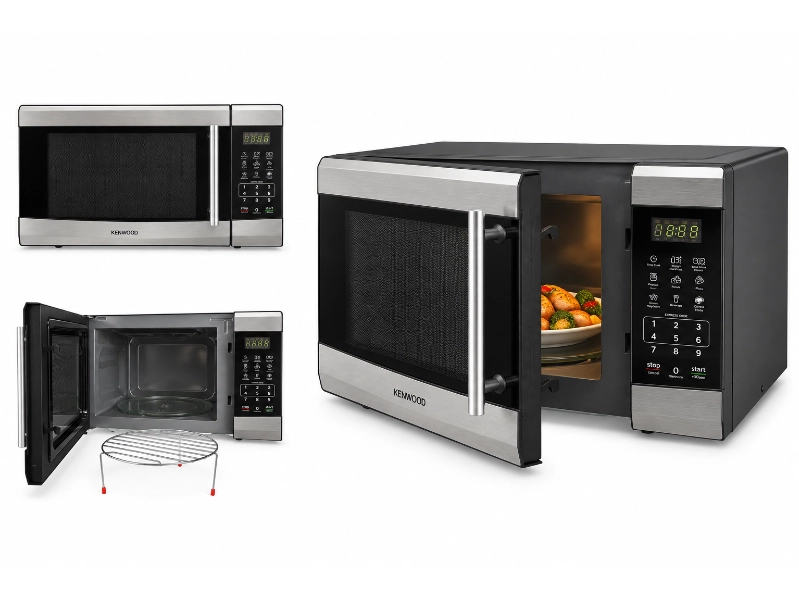
A model such as the Kenwood 42L Microwave with Grill shows what that step up can look like. Its 42 L capacity gives you plenty of room for everyday microwave cooking, while the built-in grill lets you brown and finish foods rather than simply heat them through.
The question is how often you’ll use it. If your normal microwave routine is reheating yesterday’s dinner and defrosting mince, you may never use the grill. If you regularly prepare foods that benefit from finishing under direct heat, it becomes much easier to justify.
Convection and Combination Microwaves
A convection microwave goes further. In addition to microwave cooking, it uses a heating element and fan to circulate hot air around the cavity, giving it some of the cooking ability of a conventional oven.
The Beko Combination Microwave Convection Oven Grill has a 25 L cavity, and combines microwave cooking with convection and grilling, so you get microwave speed with circulating hot air for a more oven-like result.
Some models take the idea even further. The Kenwood 30l Microwave + Air Fryer + Convection + Grill combines a 30 L microwave with convection, grilling and an air-fry function, including separate grill and air-fry accessories. That makes sense when countertop space is limited and you want one appliance to do several jobs. If you already own an air fryer and a good oven, much of that capability may simply be duplication.
But it isn’t the type of microwave every household needs.
If you have a capable oven and use your microwave almost entirely for reheating, a convection model can cost more and take up more counter space for functions you rarely use.
Countertop or Built-In Microwave
Most countertop microwaves are easy to live with because they require little installation and are easy to move. That makes them a natural choice for renters, students and anyone replacing an existing freestanding model.
The trade-off is worktop space. A larger microwave can take up surprising space once you allow enough room around it for ventilation and ensure the door opens properly.
A built-in microwave moves the appliance into the cabinetry instead. This can give a fitted kitchen a cleaner, more integrated look and keep worktops clear, but it also makes accurate measuring much more important.
Check the Cut-Out Before Buying a Built-In Microwave
Don’t choose a built-in microwave just because the front width is right.
Manufacturers normally provide both appliance dimensions and the required cabinet or cut-out dimensions. These can also include minimum clearances, ventilation requirements and positioning instructions.
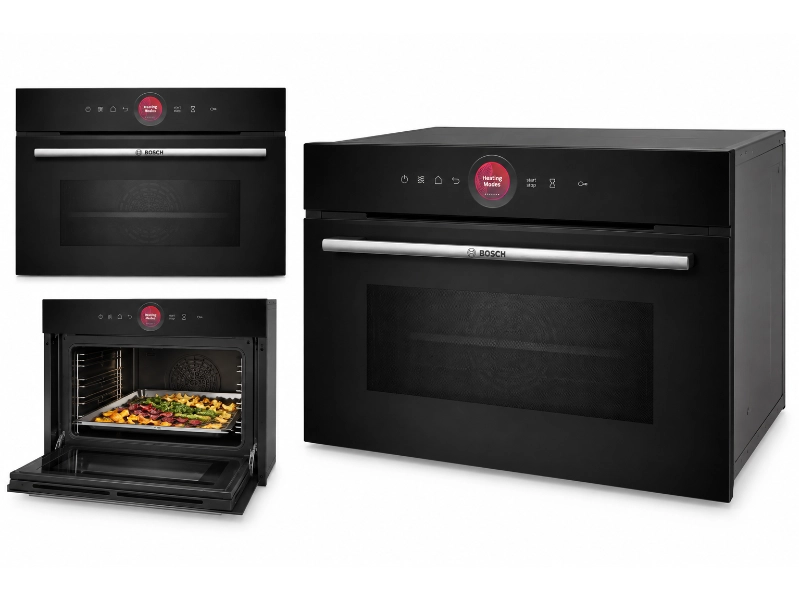
The Bosch 45L Black Series 8 Built-In Compact Microwave Oven shows why these two sets of measurements matter. The appliance itself measures 594 mm wide, but Bosch specifies an installation opening of 560–568 mm wide, 450–455 mm high and 550 mm deep. The difference between the appliance width and the maximum installation opening is because of the trim. Seeing 45 L capacity or a 60 cm appliance in a product description isn’t enough to design the opening around.
In this purchase, a few millimetres can make a substantial difference.
If you’re planning new cabinetry, book a kitchen consultation at a Hirsch’s branch and confirm the requirements for the model you’re considering before manufacturing the cabinet. Hirsch’s can also help you arrange the appropriate built-in installation service.
How Much Microwave Power Do You Need?
Microwave output is measured in watts. Generally, a higher-powered microwave heats food faster than a lower-powered one.
That doesn’t mean the microwave with the biggest wattage number automatically cooks everything better.
The difference becomes noticeable when you move between microwaves of substantially different power. A recipe or packaged meal prepared for one microwave output may need its cooking time adjusted in another machine.
Higher power can be useful if the microwave gets heavy daily use where speed matters. For occasional reheating, however, you may care more about cavity size, simple controls and price.
Also check what the specification is measuring. Microwave output power and the appliance’s total electrical input aren’t necessarily the same figure.
What Changes With Inverter Microwaves?
Traditional microwave power control often cycles the magnetron between full power and off. Select a lower setting, and the appliance delivers full microwave power for part of the time, then switches it off for the rest.
Inverter microwaves can deliver more finely controlled power. Instead of repeatedly switching between full power and no power at lower settings, an inverter system can maintain a more consistent, reduced output. This can help with gentler jobs such as defrosting, softening, and reheating foods that are easy to overcook around the edges.
The LG 42l Black NeoChef Smart Inverter Microwave Oven is one current example. The Smart Inverter ensures even heating, defrosting, and fast cooking, while the microwave itself remains a 42 L countertop solo model. In other words, inverter technology isn’t limited to complicated combination microwaves; it can also appear in a machine designed primarily for everyday microwave cooking.
However, treat inverter technology as one useful feature to compare, not a shortcut for deciding which microwave is best.
Flatbed vs Turntable Microwaves
Most people are familiar with the glass turntable inside a microwave. The plate rotates while the microwave operates, changing the food’s position within the microwave field as it cooks.
Turntables are simple and widely used, but they create a physical limit: your container must fit on the plate and rotate without catching on the cavity walls.
Flatbed designs take a different approach by removing the rotating glass plate. They aren’t nearly as common across microwave ranges, so you may need to look for this feature specifically.
Neither design should be judged as better. Look at the actual internal dimensions and how the microwave distributes energy through its cavity. The flatbed advantage is mainly usable space and flexibility, not an automatic guarantee of better cooking.
Sensor Cooking Can Take Some of the Guesswork Out
Many microwaves have preset buttons for foods such as popcorn, potatoes or frozen vegetables. A sensor cooking function is different from a simple fixed-time programme.
Sensor systems can detect moisture or steam released as food heats and use that information to adjust cooking time or power.
That can be handy if you regularly reheat plates of food or use the microwave to cook suitable vegetables and other everyday dishes.
But don’t assume a microwave with 20 preset programmes is automatically more useful than one with five. Think about how many you’d realistically use after the novelty wears off.
For many households, a +30-second or quick-start button, straightforward defrost programme and easy power adjustment will save more frustration than a long menu of specialist settings.
Features Worth Paying Attention To
Once you’ve settled on size, microwave type, and power, smaller features can help separate otherwise similar models.
- Clear controls are easily underestimated. If starting a 60-second reheat takes six button presses, you’ll notice it every day.
- A quick-start button lets you add short bursts of cooking time without programming a full cycle.
- Auto-defrost can be useful if you regularly cook ingredients from frozen, especially where the programme lets you enter the food type or weight.
- A control lock may be valuable in homes with young children, while a mute option can make a surprising difference in an open-plan home or when people use the microwave early in the morning.
Also look inside. Smooth surfaces and fewer awkward seams make splashes easier to wipe away. Stainless steel may suit the look of other appliances in your kitchen, but the ease of cleaning the actual cavity and controls deserves just as much attention.
Then there are smart microwave functions such as app control or connected cooking features. They may appeal to some households, but they shouldn’t distract from basic usability. Most people use a microwave for a few minutes at a time, so good physical controls still matter.
How Much Electricity Does a Microwave Use?
A microwave’s wattage tells you how much power it uses while operating, but overall energy consumption also depends on how long you run it.
A relatively powerful microwave running for a few minutes doesn’t necessarily use more total energy than a lower-powered appliance running much longer to complete the same job. This is why you can’t judge running costs from one wattage figure in isolation.
Microwave ovens are particularly well suited to short heating and reheating jobs because they heat food without first bringing a large oven cavity up to temperature. But the comparison changes with grill or convection cooking, where additional heating elements may run longer.
If energy use is a priority, compare the manufacturer’s electrical input specifications and consider how you’ll actually use the appliance, rather than focusing only on microwave output.
How to Choose the Best Microwave for Your Kitchen
By the time you’ve worked through the main decisions, your shortlist should be much smaller.
- Choose a compact solo microwave if you’re short on space and mainly reheat drinks, snacks and single portions.
- Choose a larger solo microwave if microwave cooking is part of your daily routine and you regularly use full-sized plates or larger serving dishes.
- Look at inverter- and sensor-equipped models if you value finer power control and more automated reheating programmes, but don’t let those features take priority over size and usability.
- Choose a microwave with a grill when browning and finishing are things you’ll genuinely do in the appliance.
- A convection or combination microwave makes more sense when you want the appliance to take on some of the work of an oven, particularly in a smaller kitchen or when extra cooking capacity would be useful.
- And if you’re renovating, choose your built-in microwave before finalising the cabinetry. The installation diagram is more important than the litre capacity printed on the box.
Best Microwaves: What to Check Before You Buy
There are plenty of specifications to compare, but they don’t all deserve equal weight.
Start with fit. Check the external dimensions, ventilation and door clearance.
Then check usable internal space. Make sure your plates and dishes will actually fit.
After that, decide whether you need a solo, grill, or convection microwave, and how much power suits your cooking style.
Only then should extras such as sensor cooking, inverter technology, smart controls and specialist programmes influence the decision.
That approach is far more likely to lead you to one of the best microwaves for your kitchen than choosing the model with the biggest capacity figure or longest feature list. Shop microwaves online with Hirsch’s, or visit your nearest store to compare sizes and controls in person.
Frequently Asked Questions
What is the most reliable microwave brand?
No single microwave brand is necessarily the most reliable across every model, price point, and year. Reliability can also differ between product ranges from the same manufacturer. Rather than choosing based on brand name alone, compare the warranty, specifications, controls, and features of the models you’re considering, and buy from a retailer that can provide after-sales support if something goes wrong.
What size microwave fits a dinner plate?
Check your dinner plate diameter against the microwave’s turntable and internal cavity measurements. A microwave can have enough advertised capacity in litres but still have a turntable too small for an oversized plate. Measure your largest everyday plate before shopping and allow enough clearance for it to rotate freely without touching the sides.
Can you put a countertop microwave inside a cabinet?
Only install a microwave in cabinetry if the manufacturer says the model is suitable for that type of installation and you can meet its ventilation and clearance requirements. Don’t simply push a countertop microwave into a tight cabinet opening just because it fits. Check the installation manual before planning an enclosed space around it.
Is a 900 W microwave powerful enough?
A 900 W microwave provides enough output for everyday jobs such as reheating meals, cooking suitable foods and defrosting. Higher-powered models can do the same jobs faster, so power matters more if you use the microwave often and speed is a priority. Remember that packaged-food instructions may need adjusting if they’re based on a different microwave wattage.
Is an inverter microwave worth it?
An inverter microwave may be worth it if you often use lower power settings for jobs such as defrosting, softening, or gentle reheating. The technology lets you control microwave power more precisely than conventional on-off cycling. It shouldn’t be the only reason you choose a model, though. Capacity, power, controls, and the overall feature set may matter more for everyday use.
Does a convection microwave replace an oven?
A convection microwave can bake and roast using circulated hot air, so it can handle some jobs you’d normally give to an oven. Whether it can replace your main oven depends on its capacity, available cooking modes and what you normally prepare. For a small household, it may cover many everyday needs, while families cooking several large dishes at once will generally value the extra space of a full-sized oven.