
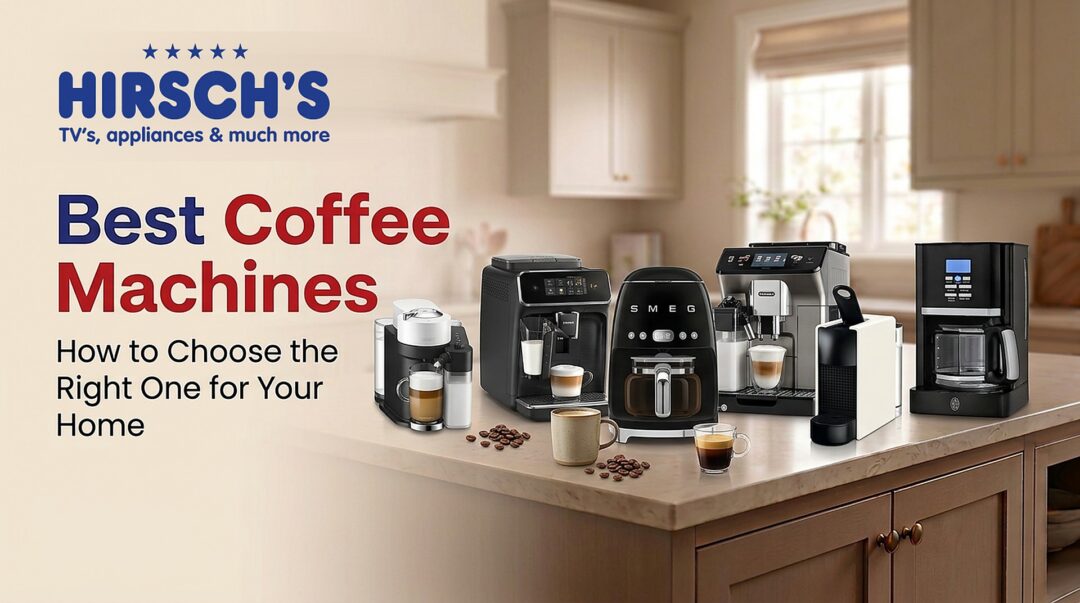
The best coffee machines aren’t necessarily the ones with the longest drinks menu or the highest price. The right choice depends on what you drink, how many cups you make, how involved you want to be, and how much counter space you’re willing to give up
Hirsch’s coffee machines range from compact capsule machines to manual espresso makers and fully automatic bean-to-cup models. Before comparing individual machines, though, it helps to work out which type fits your daily routine.
The Best Coffee Machines Start With the Right Type
Home coffee used to be a much simpler choice. For many households, it meant a percolator, a filter coffee maker, or a jar of instant coffee. Today, the range is much broader, and different machines ask very different things of their users.
One might need nothing more than a capsule and a button press. Another grinds whole beans and prepares the drink. A traditional espresso machine puts you in charge of the grind, dose and milk steaming, while a filter machine is still perfectly suited to making several mugs of black coffee at once.
But don’t be fooled into thinking one approach is automatically better. The right one, the better one, depends on how you like your coffee and how much of the preparation you want to do yourself.
Start by answering five simple questions:
- How many coffees do you make?
One or two cups a day puts very different demands on a machine than a four-person household making six or eight. - What do you drink?
Espresso and black coffee keep things relatively simple. Cappuccinos, flat whites and lattes make the milk system much more important. - Beans, ground coffee or capsules?
Capsules prioritise speed and consistency. Beans give you more choice and potentially lower running costs. - How much involvement do you want?
Some people enjoy grinding, dosing and steaming. Others want coffee before they’re properly awake. - How much room and money do you have?
Factor in counter depth and height as well as width, particularly if you’ll also need a grinder.
Once you know those answers, the field becomes much smaller.
Think About Cups per Day, Not Just Cups at a Time
A compact machine is appealing if you’re the only coffee drinker in the house. Its small water tank and used-capsule container are much less appealing when three people are making coffee before work.
Higher-volume households should pay closer attention to water tank capacity, bean hopper size, grounds or capsule storage and how often the machine cleans itself. A machine that saves 20cm of counter space but needs constant refilling can quickly lose its charm.
Filter coffee makers are also worth considering if you want several mugs of black coffee rather than several individually prepared espressos.
Milk Drinkers Should Start With the Milk System
If cappuccinos and flat whites dominate your order, don’t treat milk preparation as an afterthought.
Fully automatic machines can draw milk from a carafe and prepare a complete drink with very little intervention. Manual espresso machines usually include a steam wand, which offers more control but takes practice. Capsule machines may have a separate frother, an integrated milk system or no milk function at all.
If you mainly drink espresso or black coffee, paying substantially more for one-touch milk drinks makes less sense.
Decide How Much Work You Actually Want
This is where enthusiastic coffee advice can become unhelpful. A traditional espresso setup gives you more control, but that doesn’t make it the right recommendation for everyone.
A manual espresso machine asks you to do more. You have to grind the coffee, dose it, tamp it, lock in the portafilter and then steam milk yourself. Once you’ve learned the process, that involvement can be part of the pleasure.
A capsule or fully automatic machine trades some of that control for consistency and convenience. On a rushed weekday morning, that can be the better bargain.
Coffee Machine Types Compared
| Machine Type | Best For | Effort | Milk Drinks | Counter Space | Main Compromise |
| Capsule/pod | Fast, uncomplicated coffee | Very low | Depends on machine or frother | Low | Higher ongoing capsule cost and a fixed capsule system |
| Bean-to-cup | Freshly ground coffee without a manual workflow | Low | Very good on suitable models | Medium to large | Higher purchase price and regular cleaning |
| Fully automatic | One-touch espresso and milk drinks | Very low | Excellent on suitable models | Medium to large | Price, size and more components to clean |
| Manual espresso | People who want more control | High | Excellent with practice | Medium, plus grinder space | Learning curve and more hands-on preparation |
| Filter/drip | Several mugs of black coffee | Very low | No built-in milk preparation | Medium | Doesn’t produce espresso |
One naming complication is worth clearing up. Bean-to-cup and fully automatic are not completely separate categories. Many fully automatic machines are bean-to-cup machines: they grind the beans, prepare the coffee and dispose of the used grounds internally.
Best Coffee Machines in South Africa by Type
There isn’t one machine we’d put at the top for every household. These picks make more sense as examples of what each category does particularly well.
They are based on Hirsch’s current range, the features each machine offers, and the type of buyer it suits, rather than a claim that every machine has been independently lab-tested against every competitor.
Best Pod Coffee Machine for Home: Nespresso Essenza Mini
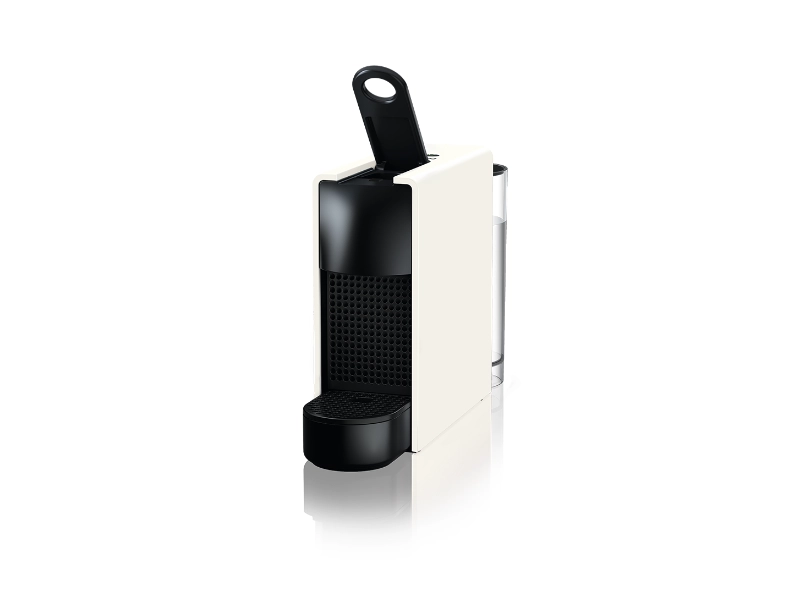
The Nespresso Essenza Mini makes a strong case for capsule coffee by keeping almost everything simple. Insert an Original capsule, choose espresso or lungo, and you’re done.
Its biggest advantage isn’t a long feature list. It’s its small footprint. That makes it ideal for flats, smaller kitchens, home offices, or anywhere you don’t want a coffee machine to dominate the counter.
That compactness comes with a trade-off.
The water tank and used-capsule container are small, so a busy household will refill and empty them more often. The standard machine also doesn’t prepare milk, although we do carry an Essenza Mini bundle with an Aeroccino frother.
This coffee machine is best for one or two coffee drinkers who prioritise speed, consistency and a small footprint.
Best Bean-to-Cup Coffee Machine: DeLonghi Rivelia
The DeLonghi Rivelia stands out from many automatic coffee machines for something you may miss in a quick spec comparison: interchangeable bean hoppers.
The Bean Switch system is genuinely useful if one person likes a dark roast while another prefers something lighter, or if you want to switch between regular and decaf beans without emptying an entire hopper first. The machine also stores up to four user profiles and uses an automatic LatteCrema system for milk drinks.
This machine suits a household where people want different coffees, but nobody particularly wants to be the morning barista.
The catch is the housekeeping. Automatic rinsing uses water, the drip tray needs regular attention, and the milk system has to be kept clean. That’s normal territory for a fully automatic machine, but it’s worth understanding before spending more for convenience.
This coffee machine is best for households that want freshly ground beans, milk drinks and plenty of choice with relatively little manual work.
Go deeper with our bean-to-cup coffee machine guide.
Best Manual Espresso Machine: DeLonghi Dedica Duo
The DeLonghi Dedica Duo is unusually narrow for an espresso machine, solving one problem with a home espresso setup: finding space for it.
It makes hot espresso, has a steam wand for milk and adds a five-minute Cold Brew function. If cold brew is part of your routine rather than something you make twice a year, pay attention to this feature.
But remember what manual means here. There is no built-in grinder. For the best results, you’ll need suitable ground coffee or a separate grinder, and consistently good espresso and textured milk take more input than a bean-to-cup machine.
Depending on your POV, that’s either the whole point or a serious problem.
This coffee machine is best for someone who wants hands-on espresso and milk steaming without sacrificing a large section of the counter.
Best Fully Automatic Coffee Machine: DeLonghi Eletta Explore
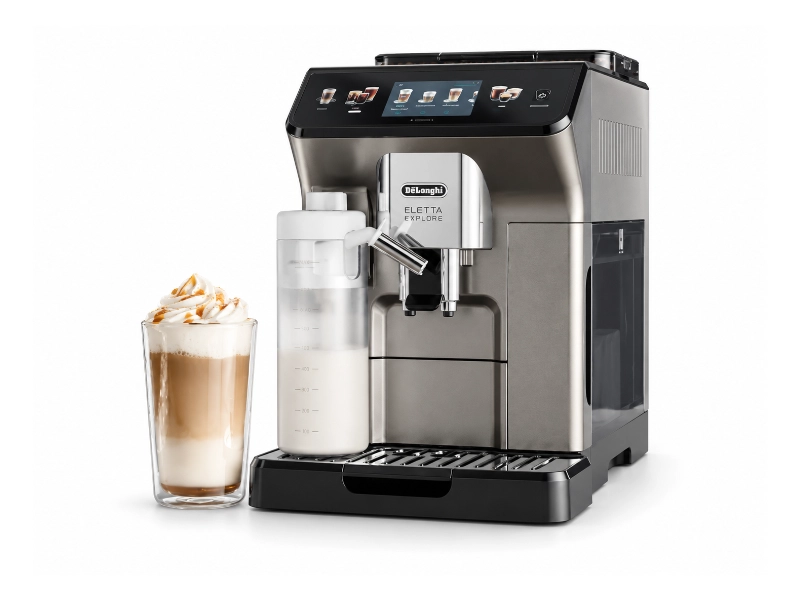
If your coffee order changes with the weather, the DeLonghi Eletta Explore has an unusually broad brief. It handles hot coffee and milk drinks but is also designed around cold coffee recipes, with separate hot and cold milk systems. And as a fully automatic machine, it offers up to 50 customisable drink recipes at the touch of a button.
The Eletta Explore’s versatility makes sense in a household or small business where different people want different drinks. It also accommodates taller travel mugs, a small detail that’s easy to overlook until your favourite mug won’t fit under the coffee spout.
The downside is straightforward: this is a substantial investment, and its automatic systems don’t eliminate the need for cleaning. Milk carafes still need proper washing, while automatic rinse cycles mean the water tank and drip tray get more use than you might expect.
This coffee machine is best for frequent coffee drinkers who want a wide menu of hot and cold drinks without preparing each one manually.
See what sets these machines apart in our guide to fully automatic coffee machines.
Best Filter Coffee Machine: Russell Hobbs Nexus Digital Coffee Maker

Espresso machines tend to get most of the attention, but they’re not automatically the sensible choice for someone who drinks big mugs of black coffee.
The Russell Hobbs Nexus Digital Coffee Maker can brew up to 12 cups and includes a programmable 24-hour timer, a strong-brew option, and a warming plate. So you can brew several cups at once rather than waiting for the machine to make each drink individually.
It’s especially useful for larger households, leisurely weekend breakfasts, or a home office where the coffee pot keeps getting used.
What it won’t do is produce espresso. You also won’t get a steam wand or automatic cappuccino at the press of a button. If you don’t regularly make those drinks, that’s hardly a sacrifice.
This coffee machine is best for households that mainly drink black coffee and regularly make more than one or two cups at a time.
Pods vs Beans: What Does Your Coffee Cost per Cup?
Machine price gets most of the attention in the shop. But coffee price is the cost that you’re going to be stuck with.
And we’ve done the maths, so you don’t need to. All prices are indicative and correct at the time of publication.
A 1kg bag of DeLonghi Classico coffee beans at Hirsch’s was R519.99. If you use approximately 18g of beans for a double espresso-style drink, 1kg gives you about 55 coffees:
1,000g ÷ 18g = 55.6 coffees
R519.99 ÷ 55.6 = approximately R9.36 per coffee
For comparison, a sleeve of 10 Nespresso Original Barista Creations capsules at R135 works out to:
R135 ÷ 10 = R13.50 per coffee
| Approximate Coffee Cost | Beans at R519.99/kg | Capsules at R135/10 |
| Per coffee | R9.36 | R13.50 |
| 2 coffees a day | R561.60/month | R810/month |
| 4 coffees a day | R1,123.20/month | R1,620/month |
| 2 coffees a day for a year | R6,832.80 | R9,855 |
| 4 coffees a day for a year | R13,665.60 | R19,710 |
Naturally, these aren’t universal prices. Change the beans, capsule type, or dose, and the cost can go up or down. A smaller bean dose lowers the bean cost, while speciality beans can raise it.
Milk isn’t included because it affects both sides differently depending on the drink you make.
In this example, drinking two coffees a day adds roughly R3,022 per year to the coffee cost. At four a day, the difference is around R6,044 per year.
This doesn’t mean you should avoid capsule machines. You just need to remember that you’re paying partly for portioning, speed and practically no coffee preparation. But if your household drinks several coffees a day, running costs become more of a concern.
Which Coffee Machine Should You Buy?
If you’re still between categories, reduce the decision to the thing you’re least willing to compromise on.
Choose a capsule machine if you want the shortest route between wanting coffee and drinking it.
Choose bean-to-cup if freshly ground coffee appeals but grinding, dosing, and tamping don’t.
Choose a fully automatic machine if you regularly make several different espresso and milk drinks and want to automate as much of the process as possible.
Choose a manual espresso machine if learning the process sounds enjoyable rather than inconvenient.
Choose a filter coffee maker if you want several cups of straightforward black coffee rather than café-style espresso drinks.
Coffee Machine Features Worth Paying For
Feature lists get long very quickly. Some additions make daily coffee easier, but others suit only certain households.
Look closely at:
- Integrated grinders: valuable for bean-to-cup machines and convenient on espresso machines, but unnecessary if you already own a good grinder.
- Automatic milk systems: worthwhile for frequent cappuccino and latte drinkers; unnecessary maintenance for someone who drinks espresso.
- User profiles: much more useful in a multi-person household than for one coffee drinker.
- Removable water tanks and brew components: not exciting on a showroom card, but they can make refilling and cleaning considerably easier.
- Cup clearance: check this if you use large mugs or travel cups.
- Cleaning prompts and automatic rinsing: useful reminders, although automatic rinsing can also mean more frequent drip-tray emptying.
- Adjustable strength, volume and temperature: useful if the household doesn’t agree on how coffee should taste.
- Cold coffee functions: worth paying for only if iced coffee and cold brew are already part of your routine, not simply because the button is there.
As stated at the start of this guide, don’t assume the machine with the most settings is the better buy. Five drinks you make regularly are more valuable than 20 you’ll try once.
Don’t Forget the Grinder, Milk and Maintenance
The machine itself may not be the whole setup.
A manual espresso machine without a built-in grinder needs either a separate grinder or properly ground coffee. If you’re serious about dialling in espresso, the grinder can affect the result as much as upgrading to a more expensive machine.
Milk is another decision point. You don’t necessarily need an automatic milk machine to enjoy cappuccinos. A separate frother can pair with a capsule, filter or simpler espresso machine, and may be easier to replace later.
And of course, there’s the cleaning. Coffee grounds, milk residue and mineral build-up don’t care how much the machine cost. Before buying, check which components come out, how you clean the milk system, and what the descaling process involves. A machine you can maintain easily is much more likely to remain pleasant to own.
Frequently Asked Questions
What is the best budget coffee machine?
There isn’t one budget machine type that suits everyone. If convenience comes first, an entry-level capsule machine is usually the cheapest route to consistent home coffee. If you mostly drink black coffee and make several cups at once, a filter machine can offer better value. Manual espresso machines become more appealing if you want café-style drinks and don’t mind doing more of the work yourself.
How much does a good coffee machine cost?
You can buy a capable filter or capsule coffee machine for well below R5,000, while manual espresso machines and entry-level bean-to-cup models extend the range considerably. Fully automatic machines with integrated grinders, milk systems, touch displays and large drink menus can run well above R12,000. Rather than setting a price first, decide which functions you genuinely need. Spending less on the right type of machine is usually better than stretching the budget for features you won’t use.
What is the easiest coffee machine to use?
Capsule machines are generally the simplest: insert a capsule, select a drink size and brew. They also leave very little loose coffee to clean up. If you want whole beans instead, a fully automatic bean-to-cup machine is the nearest equivalent. You fill the hopper and water tank, choose your drink and let the machine handle grinding and brewing. Milk systems add some cleaning, but they can make cappuccinos and lattes almost as straightforward.
Are coffee pods more expensive than beans?
They often are on a per-cup basis, although the exact difference depends on the capsule range, bean price and amount of coffee used. Using our worked example above, an 18g bean dose costs about R9.36, compared with R13.50 for one Nespresso Original capsule. For a household drinking several cups each day, that difference becomes much more noticeable over a year.
Is a bean-to-cup coffee machine worth it?
It can be, particularly if you make coffee every day and want the flavour and choice of whole beans without learning a manual espresso workflow. The higher purchase price makes less sense for an occasional coffee drinker who is perfectly happy with capsules or filter coffee. It’s easier to justify when several people use the machine, you regularly buy café-style drinks, or lower bean costs offset some of the initial spend over time.
Find the Right Coffee Machine for Your Routine
A coffee machine should make the coffee you enjoy without turning every cup into more work than you want. Start with your drinks, daily volume, preferred level of involvement, available space and total budget. Once those are clear, choosing between capsule, manual espresso, bean-to-cup, fully automatic and filter machines becomes much easier.
You can browse all coffee machines at Hirsch’s, or find your nearest Hirsch’s store if you’d prefer to see the machines and ask about available demonstrations before deciding. The best coffee machines aren’t the same for every home; they’re the ones that fit naturally with how you already like to make and drink coffee.
No Comments