
There’s something particularly unpleasant about opening the fridge and being greeted by a smell you can’t immediately identify. Perhaps you came home from holiday to find that the power had gone off, or there’s a forgotten container of leftovers lurking behind the milk.
Fortunately, removing odours from refrigerators is easy with a thorough clean and a few household ingredients. The trick is finding the source first, because no amount of bicarbonate of soda will fix a leaking container of spoiled food.
How to Get Rid of a Smelly Fridge Quickly
If you need to remove bad smells from your fridge right now, start with these six steps. You can usually complete the initial cleaning in under an hour, although stubborn odours may take several days to disappear completely.
- Remove all the food. Throw away spoiled items and check containers for leaks. Transfer food that’s still safe to eat into a cooler with ice packs while you clean.
- Take out the shelves and drawers. Check underneath the crisper drawers, around the shelf supports and behind removable compartments.
- Clean the interior. Use a solution of 2 tablespoons of bicarbonate of soda in 1 litre of warm water, or equal parts white vinegar and water, if your fridge’s manufacturer permits it.
- Clean the door seals and drainage channel. Food residue and trapped moisture can produce surprisingly strong smells.
- Rinse and dry everything thoroughly. Wipe away any cleaning residue, then leave the fridge door open and unplugged for about 15 minutes.
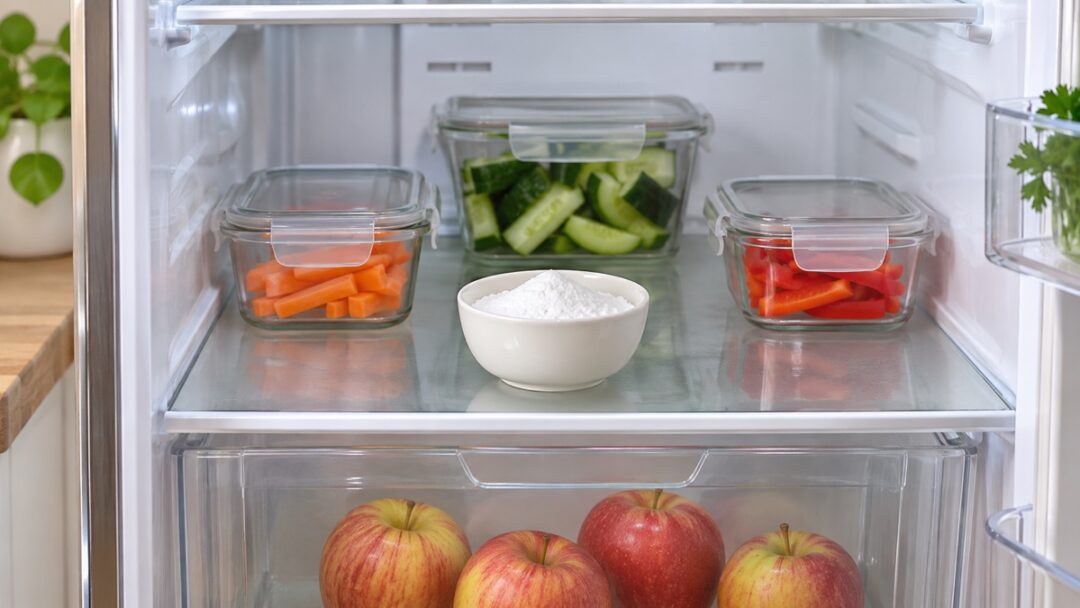
- Add an odour absorber. Place an open container of bicarbonate of soda or activated charcoal inside once the fridge is running again.
If the smell returns after cleaning, there’s probably a hidden source that needs further attention.
Why Does Your Fridge Smell Bad?
A bad smell doesn’t necessarily mean your fridge is broken. Most odours come from food, moisture or residue accumulating somewhere that’s easily overlooked.
Spoiled Food and Hidden Spills
Expired dairy products, forgotten leftovers and leaking meat packaging are common culprits. Even a small amount of milk or meat juice trapped beneath a vegetable drawer can produce a strong smell.
Check the rear corners and under containers before assuming the problem comes from the fridge itself.
Strong-smelling foods can cause problems too. Biltong, fish, onions, mature cheeses and certain leftovers release odours that circulate through the refrigerator. Store them in airtight containers rather than relying on cling film or loosely folded packaging.
Dirty Door Seals and Drainage Channels
The rubber door gasket contains folds that trap crumbs, food residue and moisture. Over time, mould may develop in these damp areas.
Some refrigerators also have a small drainage hole at the back of the compartment. Condensation flows through this opening towards an evaporation tray, usually near the compressor.
If milk, juice or other liquids enter the channel, the residue can become unpleasant as it decomposes. A blocked drain can also leave stagnant water inside the fridge.
Not every refrigerator uses the same drainage arrangement, so check your appliance manual before cleaning it.
Power Outages and Thawed Food
Extended power interruptions are a particular concern for South African households.
During an unexpected outage, the temperature inside your fridge gradually rises. If the interruption lasts long enough, meat, dairy products and other perishables can begin to spoil.
The freezer presents another problem. Frozen meat may partially thaw during an extended outage and subsequently refreeze when electricity returns. You might only discover the problem days later, when you notice an unpleasant smell or leaking packaging.
A closed refrigerator generally keeps food safely cold for approximately four hours without power. A full, unopened freezer can maintain its temperature for around 48 hours, or 24 hours when half full.
These are guidelines, not guarantees. Ambient temperature, the appliance’s condition and how often the door is opened all affect the outcome.
Don’t use smell or appearance to judge whether food is safe. Discard refrigerated perishables after an outage of four hours or longer without another cold source. Previously frozen food may be safe to refreeze if it still contains ice crystals or has remained at 4°C or below.
How to Deep Clean a Fridge That Smells Bad
A proper clean removes the residue responsible for the odour. It also gives you an opportunity to inspect areas that ordinary weekly wiping might miss.
Step 1: Empty and Unplug the Fridge
Remove food, shelves, drawers and other detachable accessories. Switch off and unplug the appliance before cleaning.
Dispose of anything spoiled or potentially unsafe. If the smell developed after an extended power outage, be especially cautious with meat, seafood, milk, eggs, and prepared meals.
Don’t leave perishable food sitting on the kitchen counter throughout a lengthy cleaning session. Use a cooler with ice packs or another functioning fridge.
Step 2: Wash the Shelves and Drawers
Wash removable parts with warm water and mild dishwashing liquid, following the manufacturer’s instructions.
Let cold glass shelves reach room temperature before washing them with warm water. Sudden temperature changes can crack glass.
Pay attention to the undersides of drawers, shelf edges and any grooves where liquids may have collected. Rinse and dry before replacing them.
Step 3: Clean the Fridge Interior
For models that permit it, mix 2 tablespoons of bicarbonate of soda with 1 litre of warm water. Apply with a soft cloth, concentrating on stains and areas where food has leaked.
An alternative is equal parts white vinegar and water, which can help remove lingering food odours.
Check your fridge’s cleaning instructions first. Some manufacturers advise against acidic or alkaline cleaning solutions because they can damage some finishes or components. Mild washing-up liquid diluted in water is another option where approved.
Never mix vinegar with bleach, and avoid abrasive scourers or strongly perfumed cleaning products.
If raw meat juices or other potentially harmful contamination were present, follow the manufacturer’s appropriate cleaning and sanitising procedure rather than relying on vinegar alone.
Step 4: Clean the Gasket and Drain
Use a soft cloth or an old, soft toothbrush to clean the folds of the rubber door seal. Wipe away loose dirt with a damp cloth and dry the gasket carefully.
Inspect the drainage opening if your model has one. Gently remove visible debris, using the cleaning method recommended in the manual.
Don’t push sharp objects into the hole or pour large quantities of cleaning solution into the drain. If the blockage is inaccessible, professional attention is safer than dismantling the drainage system yourself.
Step 5: Dry and Air Out the Fridge
Wipe all surfaces with a clean, slightly damp cloth to remove residue, then dry them thoroughly.
With the fridge unplugged, leave the door open briefly to improve ventilation. Severe smells may require repeated cleaning and a longer airing-out period.
Once everything is dry, reconnect the appliance and allow it to return to a safe operating temperature before replacing perishable food. Aim for 4°C or below in the fridge compartment.
What Absorbs Bad Smells in a Fridge?
Once you’ve removed the source and cleaned the surfaces, an odour absorber can help with the remaining smell.
Different methods work at different speeds, and none can reliably eliminate a persistent odour caused by hidden contamination.
| Method | How to Use It | When to Check the Result |
| Bicarbonate of soda | Place fresh bicarb in a shallow, open container. | After 24–48 hours; leave longer if needed. |
| Activated charcoal | Use a fridge-safe charcoal odour absorber as directed. | After 24–48 hours; effectiveness varies by product. |
| Fresh ground coffee | Put dry coffee grounds in an open, shallow bowl. | After a day; coffee may leave its own aroma. |
| Crumpled newspaper | Fill an empty, switched-off fridge with loosely crumpled newspaper. | After several days, remove and clean again. |
Bicarbonate of soda is inexpensive and convenient for mild lingering odours. Activated charcoal is another option, especially when used in a product designed for refrigerators.
Coffee grounds can absorb some odours but may replace them with a coffee smell. Reserve newspaper for an empty appliance with a particularly stubborn odour, such as after spoiled food has been left inside during a long outage.
Don’t place ordinary barbecue briquettes containing additives or lighter fluid inside your fridge.
What about lemons? A cut lemon may provide a temporary citrus scent, but it won’t remove the food residue causing the smell. Air fresheners and heavily scented products have the same limitation and shouldn’t be sprayed around stored food.
What if the Smell Won’t Go Away?
If you’ve thoroughly cleaned the interior but the odour persists, check where the smell is strongest.
A smell coming from behind or underneath the fridge may indicate a contaminated evaporation tray. If it’s accessible under the manufacturer’s instructions, you may be able to clean it safely. Otherwise, arrange a service inspection.
Rodents can occasionally become trapped behind or beneath appliances, producing a strong decomposing smell. If you suspect this, unplug the appliance and have the area inspected safely.
A smell that immediately returns inside an empty fridge may have penetrated plastic components, damaged liners or insulation after severe food spoilage. These odours can be extremely difficult to remove.
If the refrigerator also struggles to cool, experiences repeated frost build-up or develops large amounts of condensation, the problem may involve the defrost system, door seal or another refrigeration component.
Hirsch’s service and repairs department can help assess appliance faults.
When Is a Smelly Fridge Beyond Repair?
A bad odour alone rarely justifies replacing a refrigerator.
However, replacement may become necessary when contamination has penetrated inaccessible insulation or structural components and repeated cleaning cannot remove it. Persistent odours that make the appliance unsuitable for food storage deserve a professional assessment.
If you notice a burning smell, smoke or signs of an electrical fault, switch off and disconnect the appliance if it’s safe to do so, and arrange an inspection. Don’t keep using it while you investigate the smell.
Compare the cost of a repair with the appliance’s age and condition before deciding. If replacement is necessary, Hirsch’s range of fridges and freezers includes options for different household sizes and kitchen layouts.
Why Does a Brand-New Fridge Smell?
A newly delivered refrigerator may have a faint plastic or manufacturing smell when you first unpack it.
This is usually associated with new interior materials and packaging. It should gradually fade as you clean, ventilate, and use the appliance.
Remove all protective packaging, wipe the interior according to the manual and allow the appliance to ventilate before use.
A strong chemical, burning or electrical smell is different. If it persists or worsens, stop using the appliance and contact the manufacturer or retailer.
How to Prevent Fridge Odours From Returning
A few small habits can prevent most unpleasant fridge smells.
- Check the fridge every two weeks. Inspect leftovers, opened dairy products, vegetables and items pushed to the back.
- Use airtight containers. Pay particular attention to biltong, fish, cheese, onions and cooked meals.
- Clean spills immediately. Check underneath drawers whenever something leaks.
- Adjust crisper humidity settings. Follow the appliance’s guidance for the produce stored there. Humidity controls help manage moisture, but won’t prevent spoiled food from smelling.
- Monitor fridge temperatures. Keep the fridge at 4°C or below and the freezer around -18°C. An appliance thermometer can help you identify temperature changes after power interruptions.
- Check door seals. Damaged or dirty gaskets can allow warm air inside, affecting food storage temperatures.
Some newer refrigerators also have built-in odour-reduction systems. For example, the Samsung Samsung 540l Black Combi Fridge (RT53DG7B10B1FA) uses an Active Fresh Filter with activated carbon, while the Bosch 483l Stainless Steel Series 4 Fridge-Freezer Combi (KGN55VI20Z) includes an AirFresh filter.
These features can help reduce circulating odours, although they don’t replace proper cleaning, safe food storage or regular maintenance.
If your fridge develops an unpleasant smell again, investigate it promptly. Finding a small spill today is considerably easier than dealing with spoiled food that’s been sitting unnoticed for a week.
No Comments